Category: Casino

  • What Is a Dragon in Baccarat? The Bonus Bet, the Dragon 7, and the Streak Explained

    What Is a Dragon in Baccarat? The Bonus Bet, the Dragon 7, and the Streak Explained

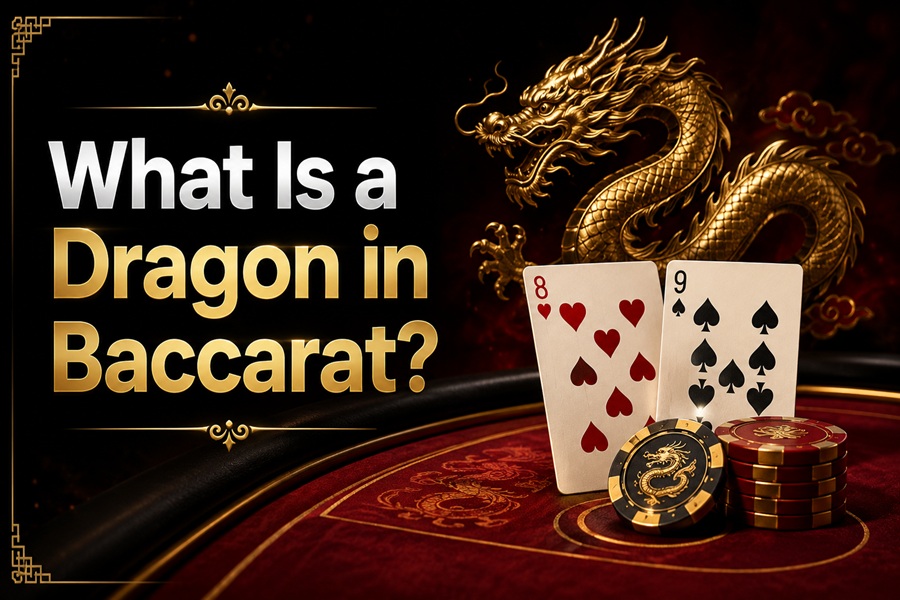
    Quick answer: “Dragon” in baccarat means one of three different things. Most often it refers to the Dragon Bonus, a side bet that pays based on how big your winning hand’s margin is. It can also mean the Dragon 7, a side bet in EZ Baccarat that pays 40:1 when the banker wins with a three-card total of seven. And on the scoreboard, a “dragon” is a long winning streak by one side. This guide covers all three so you know exactly which one you are looking at.

    The word “dragon” gets used loosely at the baccarat table. Ask three players what it means and you may get three answers. All of them are correct, because the term has three separate uses.

    Here is each one, clearly explained, with the payouts and odds that matter.

    The three meanings of “dragon” in baccarat

    Term What it is Where you see it
    Dragon Bonus A side bet on your hand’s margin of victory Most baccarat and mini-baccarat tables
    Dragon 7 A side bet on a banker three-card 7 EZ Baccarat tables
    Dragon (streak) A long run of wins by one side The scoreboard, called the roads

    Most people searching “dragon in baccarat” mean the Dragon Bonus. So we start there.

    Meaning 1: The Dragon Bonus side bet

    What is the Dragon Bonus?

    The Dragon Bonus is a side bet on the margin of victory. You are betting that your chosen hand (player or banker) will not just win, but win by a lot, or win as a natural.

    The bigger the gap between the winning and losing hand, the bigger your payout. A crushing nine-point win pays the most.

    The name fits the idea. Like a dragon overpowering an opponent, the bet rewards a decisive, lopsided win, not a narrow one.

    It is not a separate game. It is an optional wager you place alongside your main bet.

    How does the Dragon Bonus work?

    There are two ways to win.

    1. A natural win. Your hand wins with a natural 8 or 9 (the best two-card totals).
    2. A non-natural win by 4 or more points. The margin between the two hands must be at least four.

    Anything less than a four-point margin (without a natural) loses. If both hands are natural and tie, the bet is a push and your stake is returned.

    You must place a main bet first. The Dragon Bonus is tied to the player or banker side and cannot be played on its own.

    What are the Dragon Bonus payouts?

    The payout climbs with the margin. This is the standard paytable, and it is the same for both the player and banker Dragon Bonus.

    Result Payout
    Non-natural win by 9 points 30:1
    Win by 8 points 10:1
    Win by 7 points 6:1
    Win by 6 points 4:1
    Win by 5 points 2:1
    Win by 4 points 1:1
    Natural win 1:1
    Natural tie Push

    Example. You bet the player and add a Player Dragon Bonus. The player finishes on 9, the banker on 0. That is a nine-point, non-natural win. Your Dragon Bonus pays 30:1. A $10 side bet returns $300 in profit.

    Player or banker Dragon Bonus: which is better?

    The player side. This is the single most important thing to know, and many players get it backwards.

    Bet House edge
    Player Dragon Bonus 2.65%
    Banker Dragon Bonus 9.37%

    (Based on eight decks, per Wizard of Odds analysis.)

    That gap is huge. The Player Dragon Bonus has a house edge close to the main game. The Banker Dragon Bonus is one of the worst bets on the table.

    The reason traces back to baccarat’s drawing rules. The banker draws differently, which changes how often big-margin wins happen on each side. The upshot is simple: if you play the Dragon Bonus, favor the player side.

    Note that some casinos call this exact pair of bets the “Phoenix Bonus.” Same bet, different name.

    Is the Dragon Bonus worth it?

    It depends on what you want from the session.

    • For value: the Player Dragon Bonus at 2.65 percent is reasonable for a side bet. The Banker version at 9.37 percent is not.
    • For thrill: the 30:1 top payout keeps you invested until the final card, which is the whole appeal.
    • For strategy: treat it as a small, fun wager, not a core bet. Chasing the big payout with large stakes is how bankrolls disappear.

    A common piece of advice from experienced players on gambling forums: keep side-bet stakes tiny, stick to the player side, and never let a 30:1 dream pull you into over-betting.

    Meaning 2: The Dragon 7 (and its side-bet family)

    What is the Dragon 7 in EZ Baccarat?

    The Dragon 7 is a different bet entirely, found in EZ Baccarat. That is a commission-free version of the game popular in many casinos.

    The Dragon 7 wins when the banker wins with a three-card hand totaling seven. It pays 40:1.

    In EZ Baccarat, that specific banker three-card 7 is normally a push on the main banker bet. That push is how the game replaces the usual 5 percent commission. The Dragon 7 side bet lets you bet directly on that outcome happening.

    The house edge on the Dragon 7 is around 7.6 percent, so like most side bets, it is a high-edge, high-payout thrill.

    What is the Panda 8 and the rest of the dragon family?

    Once you know the Dragon 7, a few cousins make sense.

    Side bet Wins when Payout
    Dragon 7 Banker wins with a three-card 7 40:1
    Panda 8 Player wins with a three-card 8 25:1

    The Panda 8 is the player-side counterpart, found in some EZ Baccarat games. Its house edge is higher, around 10 percent.

    You may also see rebranded versions. The “Phoenix” is a Dragon 7 that pays slightly less (37:1), and the “Kirin” is a Panda 8 that pays 24:1. Lower payouts mean higher house edges, so the exact name and paytable matter.

    Meaning 3: The dragon streak on the scoreboard

    What is a “dragon” on the baccarat roads?

    This is the oldest, most cultural use of the word.

    Baccarat tables display scoreboards called roads. They track every result with colored marks: one color for banker wins, another for player wins, another for ties.

    When one side wins many hands in a row, that long unbroken run is called a “dragon.” A very long streak is sometimes called a “dragon tail.” Riding a streak is called “chasing the dragon.”

    This is huge in baccarat culture, especially in Asian casinos, where pattern-tracking is a core ritual of the game.

    Does the dragon streak actually help you win?

    No, and this is important.

    A dragon streak is a record of what already happened. It does not predict the next hand. Each hand is essentially independent, so a long banker run does not make the next banker win more or less likely.

    Players feel that a streak is “hot” or “due to break.” Both feelings are the same gambler’s fallacy in different clothes. The cards have no memory.

    Tracking dragons is fun and part of the experience. Just do not bet more because a streak looks impressive. The math does not change.

    Quick guide: which dragon do you mean?

    A fast way to tell them apart.

    • Talking about a side bet on a big win? That is the Dragon Bonus.
    • Playing EZ Baccarat and betting on a banker three-card 7? That is the Dragon 7.
    • Looking at the scoreboard and seeing a long win streak? That is a dragon (streak).

    Same word, three very different things. Knowing which is which saves you from betting on the wrong one.

    Frequently asked questions

    What does “dragon” mean in baccarat?

    It usually means the Dragon Bonus side bet. It can also mean the Dragon 7 bet in EZ Baccarat, or a long winning streak on the scoreboard.

    How much does the Dragon Bonus pay?

    Up to 30:1 for a non-natural win by nine points. Smaller margins pay less, down to 1:1.

    Is the player or banker Dragon Bonus better?

    The player side. Its house edge is 2.65 percent, versus 9.37 percent for the banker side.

    What is the Dragon 7 in baccarat?

    A side bet in EZ Baccarat that pays 40:1 when the banker wins with a three-card total of seven.

    Can I bet the Dragon Bonus by itself?

    No. It must be placed alongside a main player or banker bet.

    Does a dragon streak change the odds?

    No. Past results do not affect future hands. Streak-chasing is a myth.

  • How to Play Roulette in a Casino: Rules, Bets, and the Wheel That Gives You the Best Odds

    How to Play Roulette in a Casino: Rules, Bets, and the Wheel That Gives You the Best Odds

    Quick answer: To play roulette in a casino, buy chips from the dealer, place them on the numbered layout before betting closes, and win if the ball lands on a number, color, or group you backed. The single most important choice is the wheel. Play European or French roulette (single zero) and avoid American roulette (double zero). That one decision nearly halves the house edge, from 5.26 percent down to 2.70 percent or lower.

    Roulette looks intimidating with its spinning wheel and crowded layout. It is one of the easiest games to actually play. You do not need any skill to place a bet, and the rules take five minutes to learn.

    This guide walks you through a real table, step by step, then shows you every bet and which version of the game to choose.

    What is roulette and how does it work?

    Roulette is a wheel-and-ball game. The wheel has numbered pockets from 1 to 36, plus one or two green zeros. You bet on where the ball will stop.

    The flow is simple.

    1. Players place chips on the betting layout.
    2. The dealer (croupier) spins the wheel and releases the ball.
    3. The dealer calls “no more bets” before the ball drops.
    4. The ball settles into a pocket.
    5. Winning bets are paid, losing chips are cleared, and the next round begins.

    That is the entire loop. Everything else is just knowing which bets exist and what they pay.

    How do you buy in and place bets at the table?

    Here is what actually happens when you walk up to a roulette table.

    • Get special chips. Roulette uses its own colored chips so each player’s bets can be told apart. Hand the dealer your cash or casino chips and ask for a color. The dealer assigns you a value per chip.
    • Place bets before the spin. Put your chips directly on the numbers or areas you want. You can keep betting until the dealer waves off action.
    • Do not touch chips after “no more bets.” Once the dealer calls it, hands off the layout.
    • Wait to be paid. The dealer marks the winning number, clears losers, then pays winners. Do not grab your winnings until the marker is lifted.
    • Cash out at the table. Roulette color chips have no value elsewhere. Trade them back for regular chips before you leave.

    A quick etiquette note: if you cannot reach a number, ask the dealer to place the bet for you. It is normal and expected.

    What are the different roulette bets?

    Bets split into two groups: inside and outside. Inside bets sit on the numbers and pay more. Outside bets cover big groups and pay less but hit more often.

    Inside bets

    Bet Covers Payout
    Straight up 1 number 35:1
    Split 2 numbers 17:1
    Street 3 numbers (a row) 11:1
    Corner 4 numbers (a square) 8:1
    Six line 6 numbers (two rows) 5:1

    Outside bets

    Bet Covers Payout
    Red or Black 18 numbers 1:1
    Odd or Even 18 numbers 1:1
    Low (1 to 18) or High (19 to 36) 18 numbers 1:1
    Dozen (1 to 12, etc.) 12 numbers 2:1
    Column 12 numbers 2:1

    New players usually start with outside bets like red or black. They win close to half the time, which keeps you in the game longer.

    Which roulette wheel has the best odds?

    This is the question that matters most, and most casual players never ask it.

    There are three main versions. They play almost identically, but the house edge is very different.

    Version Zeros Pockets House edge
    French Single (0) 37 1.35% on even-money bets
    European Single (0) 37 2.70%
    American Double (0 and 00) 38 5.26%

    The extra double zero on the American wheel does not change any payout. It just adds a pocket the house wins on. That single addition nearly doubles the edge against you.

    The rule is simple: play French or European whenever you can. Skip American roulette unless it is the only wheel available.

    What are the La Partage and En Prison rules?

    These two rules are why French roulette has the lowest edge, and many players have never heard of them.

    • La Partage. If you make an even-money bet (like red or black) and the ball lands on zero, you get half your stake back instead of losing it all.
    • En Prison. A variation where your even-money bet is “imprisoned” for one spin instead of lost. If it wins the next spin, you get your full stake back.

    Both rules cut the house edge on even-money bets to about 1.35 percent. That makes French roulette one of the best bets on the casino floor.

    Some Atlantic City tables apply a similar “surrender” rule to American roulette, which lowers the even-money edge to 2.63 percent. Worth knowing if French is not offered.

    Can you use a strategy to win at roulette?

    You can manage how you bet, but you cannot beat the math. This is the honest truth that betting-system sellers ignore.

    Systems like Martingale (doubling after a loss) or the Fibonacci sequence only change your bet sizing. They do not change the odds of any single spin. The wheel has no memory. A number that just hit is exactly as likely to hit again as any other.

    Experienced players on gambling forums repeat the same points. Every spin is independent, so-called “hot” or “cold” numbers are a fallacy, and the only reliable way to lose less is to play a single-zero wheel and manage your bankroll.

    Treat any system as a way to structure your fun, not a path to profit.

    How should you manage your bankroll at roulette?

    A few habits keep a session enjoyable instead of expensive.

    • Set a budget before you sit down, and stop when you hit it.
    • Divide your money into smaller session amounts so one bad run does not end the night.
    • Keep individual bets small relative to your total, so variance cannot wipe you out fast.
    • Set a win goal and walk away when you reach it.

    Roulette is entertainment with a built-in cost. Budgeting is what keeps that cost predictable.

    Frequently asked questions

    What is the easiest roulette bet for beginners?

    Even-money outside bets like red or black. They win close to half the time.

    Which roulette wheel should I play?

    French or European, both single zero. Avoid American, which has a double zero and a 5.26 percent edge.

    What does a straight-up bet pay?

    35 to 1. You bet one number, and a win returns 35 times your stake plus your original chip.

    Can a system beat roulette?

    No. Betting systems change bet sizes, not the odds of each spin.

    Why does roulette use different colored chips?

    So the dealer can tell each player’s bets apart on a shared layout.

    Do previous numbers affect the next spin?

    No. Each spin is independent. Past results do not predict future ones.

  • How to Win at Baccarat: The Only Bet That Matters and the Myths That Cost You Money

    How to Win at Baccarat: The Only Bet That Matters and the Myths That Cost You Money

    Quick answer: You cannot beat baccarat’s built-in house edge, but you can play it smarter than almost everyone at the table. The single best move is to bet the banker every hand. It has the lowest house edge at 1.06 percent. Skip the tie bet, which carries a brutal 14.36 percent edge. Then manage your bankroll and set a stop point. That is the entire winning approach, and everything else is noise.

    Baccarat has a reputation for being complex and glamorous. The truth is the opposite. It is one of the simplest games in the casino, and the “right” strategy fits on a napkin.

    This guide separates what actually improves your results from the systems and superstitions that quietly drain bankrolls. No hype, just the math.

    Can you actually win at baccarat?

    Yes, in the short term. No, in the guaranteed long term.

    Baccarat is a negative-expectation game. Over enough hands, the house edge wins. But the edge here is small, which means good sessions happen often, and a disciplined player can walk away ahead.

    The famous example is Australian billionaire Kerry Packer, who reportedly won a fortune over a multi-day baccarat run in Las Vegas. That was variance, not a system. High rollers lose those same runs just as often. Do not mistake a lucky streak for a strategy.

    Here is the honest framing: your goal is not to “beat” baccarat. It is to give the house the smallest possible edge and protect your money while you play.

    What is the best bet in baccarat?

    The banker. Always the banker. This is the closest thing to a rule in the entire game.

    Here is why, in one table.

    Bet House edge Wins about Payout
    Banker 1.06% 45.8% of hands 1:1 minus 5% commission
    Player 1.24% 44.6% of hands 1:1
    Tie 14.36% 9.6% of hands 8:1 (sometimes 9:1)

    The banker bet returns about 98.94 percent (its RTP). That puts baccarat among the best-odds games in the entire casino, ahead of roulette and most slots.

    Excluding ties, the banker wins about 51 percent of decided hands. That edge exists because of the drawing rules: the banker acts last and reacts to the player’s hand.

    Yes, the casino charges a 5 percent commission on winning banker bets. It is still the best bet even after that commission. A $100 banker win pays $95 net, and the math still favors it over every other option.

    Why should you never make the tie bet?

    Because it is the worst bet on the table by a wide margin.

    The tie pays 8:1 (or 9:1 at better tables), which looks tempting. But ties happen only about 9.6 percent of the time. The payout does not come close to matching the true odds.

    The result is a house edge of 14.36 percent. Compare that to 1.06 percent on the banker. You are handing the casino more than thirteen times the edge for a shot at a flashy payout.

    The tie is a trap dressed up as excitement. Skip it every time.

    Does betting on the player ever make sense?

    Sometimes, for variety.

    The player bet has a house edge of 1.24 percent. That is very close to the banker’s 1.06 percent, and it has no commission.

    Some players prefer it to avoid the commission math or to break up a long banker session. That is fine. Just know you are giving up a tiny edge each time.

    If you want the mathematically best play, stay on the banker.

    How should you manage your bankroll?

    This matters more than any in-game decision. Bankroll discipline is what separates players who last from players who bust.

    Follow four simple rules.

    1. Bet small units. Keep each wager at roughly 1 percent of your total bankroll. Play tables where the minimum is no more than that.
    2. Set a loss limit. Decide the most you are willing to lose before you sit down. When you hit it, walk away.
    3. Set a win cap. Decide a number where you will stop and lock in profit. The most common mistake is winning, then giving it all back.
    4. Never chase losses. Raising your bets to recover a loss is the fastest way to a much bigger one.

    A widely repeated line from experienced players says it best: the only real edge most people have is the discipline to walk away when they are ahead. Write your stop number down before you play.

    Do baccarat betting systems work?

    No. Not one of them lowers the house edge. This is the biggest myth in the game.

    Systems like Martingale, Fibonacci, and Paroli only change the order and size of your bets. They do not change the math of each hand.

    System How it works The problem
    Martingale Double your bet after every loss A cold streak can wipe you out fast, and table limits cap your recovery
    Fibonacci Raise bets along a number sequence Slower to crash, but still loses over time
    Paroli Raise bets after a win Fun and lower-risk, but no long-term edge

    Systems can shape how a session feels. A positive-progression system like Paroli risks less on cold runs. But none of them beats the house. Treat them as a way to structure your fun, not as a path to profit.

    Can you count cards in baccarat?

    Not in any practical way.

    Card counting works in blackjack because removed cards shift the odds meaningfully. In baccarat, the effect is tiny. The advantage from tracking cards is so small it is worthless for regular play.

    Anyone selling a baccarat counting system is selling you something that does not work. Save your money.

    Should you use the scoreboards and roads?

    They are fun to track, but they do not help you win.

    Every baccarat table gives you cards and pencils to record results. The big scoreboards, called roads, show streaks of banker and player wins in colored dots.

    Players study them religiously looking for patterns. Here is the hard truth: past hands do not predict future ones. Each hand is essentially independent. A long banker streak (sometimes called a “dragon”) does not make the next hand more or less likely to continue.

    Tracking the roads is part of baccarat’s culture and ritual. Enjoy it if you like. Just do not bet real money on the belief that a pattern is “due.”

    What about game selection and variants?

    Small choices here shave the edge slightly.

    • Fewer decks help. On the banker bet, fewer decks lower the house edge a touch. Look for six-deck or single-deck games where available.
    • Watch commission-free tables. “No commission” baccarat sounds better, but many of these tables reduce the banker payout on certain wins (for example, a banker win with a total of 6 pays half). That rule can actually raise the house edge to around 1.46 percent. Read the table rules before you sit.
    • Speed matters for your wallet. Faster games mean more hands per hour, which means more exposure to the edge. Slower play stretches your bankroll.

    The one-page smart-play checklist

    If you remember nothing else, remember this.

    • Bet the banker. Every hand.
    • Never bet the tie.
    • Ignore betting systems as a way to win.
    • Skip side bets, or keep them tiny (they carry high house edges).
    • Bet about 1 percent of your bankroll per hand.
    • Set a win cap and a loss limit before you start.
    • Stop when you hit either one.
    • Read the table rules, especially on commission-free games.

    That is the complete, honest playbook. It will not guarantee a win. It gives you the best odds baccarat allows and protects your money along the way.

    Frequently asked questions

    What is the best bet in baccarat?

    The banker, with a 1.06 percent house edge, even after the 5 percent commission.

    What is the worst bet in baccarat?

    The tie. Its house edge is about 14.36 percent.

    Is baccarat a game of skill or luck?

    Mostly luck. After you place your bet, there are no decisions to make. Your only skill is bet selection and money management.

    Can a betting system beat baccarat?

    No. Systems like Martingale change bet sizing, not the house edge.

    How much should I bet per hand?

    Around 1 percent of your total bankroll, so a bad streak cannot wipe you out.

    Do baccarat streaks mean anything?

    No. Past hands do not influence future ones. Streak-chasing is a myth.